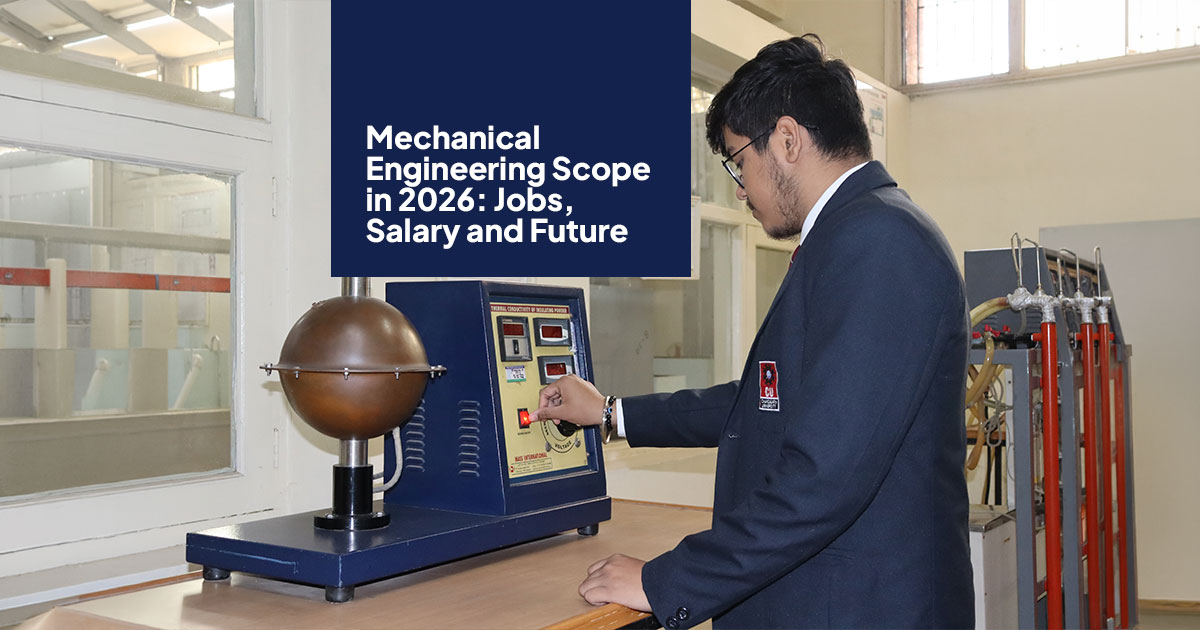
Mechanical Engineering Scope in 2027: Jobs, Salary and Future
You are in your second year of mechanical engineering, and someone from your college just got a software job at Rs 8 LPA. Your uncle is asking why you did not take CSE. Your parents are wondering if mechanical has a future at all. And you are sitting there, not sure what to say.
The manufacturing sector is among the top five hiring sectors in India today, alongside technology, BFSI, renewable energy, and healthcare. India's Make in India initiative aims to raise manufacturing's contribution to GDP to 25% by 2030. That push needs a lot of mechanical engineers.
This blog covers exactly what the scope of mechanical engineering looks like in 2026. Real job roles, real salary numbers in rupees, which sectors are actually hiring and what you need to do to stand out. No vague statements like 'the future is bright', just what is actually happening in the job market today.
GATE for PSUs and M.Tech, IES/ESE for Engineering Services
Postgraduate options
M.E. / M.Tech, MBA, Specialised Diplomas
What is the Scope of Mechanical Engineering in India?
Mechanical engineering has not died. It has changed. Ten years ago, a mechanical engineer was mostly building or maintaining machines. Today, the same engineer might be designing EV battery enclosures, programming robotic arms on a production line, or working on renewable energy infrastructure. The field has grown wider, not smaller.
India is spending heavily on infrastructure. The Union Budget 2024-25 allocated Rs 11.11 lakh crore for capital expenditure on infrastructure. Roads, metro networks, airports, smart cities and defence projects all need mechanical engineers at every stage. Beyond infrastructure, the EV push, the semiconductor manufacturing drive, and the industrial automation wave are creating new types of mechanical engineering roles that did not exist five years ago.
The scope of mechanical engineering in India spans both the government and private sector, traditional industries and emerging ones. What you earn and where you work depends almost entirely on which sector you choose and what skills you build on top of your degree.
Top 8 Career Options After Mechanical Engineering
Here are some of the most popular 8 job roles after Mechanical Engineering and what they involve:
1. Design Engineer
Design Engineers create machine parts, products, and system designs using software like AutoCAD and SolidWorks. Their work focuses on turning ideas into practical designs that can be manufactured in real industries.
2. Production and Manufacturing Engineer
Production and Manufacturing Engineers handle the day to day operations inside factories and manufacturing units. Their work focuses on improving production speed, reducing mistakes, and making sure products are made efficiently and properly.
3. Oil, Gas, and Power Plant Engineer
Engineers in this field work in energy and power industries such as refineries, oil plants, and power stations. They manage equipment, monitor operations, and ensure machines and systems work smoothly.
4. Quality Control and Quality Assurance Engineer
Quality Control and Quality Assurance Engineers make sure products meet company and safety standards. They inspect products, find issues, and help improve the overall quality of manufacturing processes.
5. EV Systems and Automotive Engineer
This role is becoming very popular because of the growth of electric vehicles in India. Engineers in this field work on battery systems, vehicle design, thermal management, and EV technologies used in modern cars and bikes.
6. Thermal and HVAC Engineer
Thermal and HVAC Engineers work on cooling, heating, ventilation and refrigeration systems used in homes, offices, hospitals, and industries. Their work helps maintain comfortable and efficient indoor environments.
7. Robotics and Automation Engineer
These engineers work with robots, automated machines, and smart industrial systems. Their role is to help companies automate repetitive tasks and improve overall productivity using modern technology.
8. Aerospace Engineer
Aerospace Engineers work on aircraft, satellites, rockets, and defence systems. This field involves designing and testing systems used in aviation and space technology.
Mechanical Engineering Job Description and Salary in India 2026
Here is the honest salary picture for mechanical engineers in India. No padded numbers. These are realistic ranges based on actual fresher hiring data.
Job Role
Private Sector Salary
PSU Salary (GATE)
Experience (5 Years)
Design Engineer
₹3–5 LPA
N/A
₹8–12 LPA
Production Engineer
₹3–5 LPA
N/A
₹7–12 LPA
EV / Automotive Engineer
₹4–6.5 LPA
N/A
₹10–18 LPA
Robotics / Automation Engineer
₹4–7 LPA
N/A
₹12–20 LPA
Aerospace Engineer
₹4–7 LPA
₹6–8 LPA
₹12–22 LPA
Oil, Gas & Power Plant Engineer
₹4–6 LPA
₹6–8 LPA
₹12–20 LPA
QC / QA Engineer
₹2.5–5 LPA
N/A
₹7–12 LPA
HVAC Engineer
₹2.5–4.5 LPA
N/A
₹6–10 LPA
One thing you need to know about PSU salaries: the Rs 6 to 8 LPA figure for freshers includes housing allowance, medical benefits, and other perks. The take-home cash is closer to Rs 40,000 to Rs 50,000 per month, but the total compensation with allowances is genuinely higher than most private sector offers at the same experience level. The catch is GATE. Most serious GATE aspirants take 2 to 3 attempts before getting a good rank. Plan that timeline realistically.
Future Scope of Mechanical Engineering in India
If you are wondering whether mechanical engineering is still a good choice for the next 10 years, the answer is yes, but with a condition. The condition is upskilling. A mechanical engineer who sticks only to what the textbook taught will face a tougher market than one who picks up relevant skills in automation, EV technology, or manufacturing software.
Here is what is driving demand for mechanical engineers in India right now and over the next 5 to 10 years:
Electric Vehicles (EVs): India's EV sector is growing rapidly. The Society of Indian Automobile Manufacturers (SIAM) reported over 1.6 million EV registrations in FY2024. EV manufacturers require mechanical engineers for chassis design, thermal management, and manufacturing.
Defence Manufacturing: India's defence exports crossed ₹21,083 crore in FY2024, according to the Ministry of Defence. Organisations such as HAL, DRDO, BEL, and private defence companies are actively recruiting mechanical engineers.
Renewable Energy Infrastructure: Solar, wind, and hydro power projects need mechanical engineers for turbine design, installation, operation, and maintenance. India aims to achieve 500 GW of renewable energy capacity by 2030.
Smart Manufacturing & Industry 4.0: Industries are increasingly adopting automation, robotics, and IoT-enabled manufacturing systems. Mechanical engineers with expertise in these technologies are in high demand.
Infrastructure & Construction: Highways, metro rail projects, airports, and smart cities require mechanical engineers for HVAC systems, plumbing, structural support, and equipment management.
Who Should Choose Mechanical Engineering and What to Do Next
Mechanical engineering works best for students who genuinely like understanding how physical things work. If you like designing machines, solving problems with your hands as much as your head, or working on systems that have real physical outcomes, mechanical engineering suits you. If you are choosing it only because you could not get CSE and have no actual interest in the field, you will struggle both in the coursework and in placements.
If you are already in mechanical engineering and wondering what to do, here is what actually matters:
Learn CAD Software: Master industry-standard tools such as SolidWorks, AutoCAD, or CATIA and earn a certification. While colleges focus on theory, employers prefer candidates who can confidently use design software.
Choose Your Specialisation Early: Focus on a high-growth field like Electric Vehicles (EV), Aerospace, or Manufacturing Automation. Decide by your second year and align your projects, certifications, and internships with that domain.
Gain Core Industry Experience: Pursue internships with manufacturing plants, automotive companies, or energy firms instead of generic IT service companies. Hands-on industry exposure significantly improves your employability.
Prepare for GATE in Advance: If you're aiming for PSU or government engineering jobs, begin GATE preparation from your third year. Starting early makes it easier to balance academics and exam preparation.
Develop Basic Programming Skills: Learn Python, MATLAB, or PLC programming. You don't need to become a software developer, but these skills are valuable for working with automation systems, robotics, and data-driven manufacturing.
Mechanical Engineering at Chandigarh University
Chandigarh University’s Mechanical Engineering program focuses on practical and industry-ready learning. Students get hands-on experience with CAD/CAM tools, manufacturing, robotics, EV technology and smart manufacturing through modern labs and workshops.
The university is ranked by QS and regularly appears among the top private universities in NIRF rankings. Companies like Tata Motors, Larsen & Toubro, Mahindra and Siemens visit the campus for Mechanical Engineering placements.
Check the full list of engineering programs and specialisations at CU Engineering. For students worried about fees, CU has merit-based scholarships worth exploring before making any decision. Details at CU Scholarship.
To understand admissions eligibility and process, visit CU Admissions for after-12th programs. CU's placement record with 800+ recruiting companies is something you can verify directly at CU Placements.
Final Thoughts
Mechanical Engineering is changing with time and creating opportunities in modern industries like EVs, automation, robotics, and manufacturing. Students who keep learning new skills and gain practical experience will have strong career growth in the coming years. Learning tools like CAD, focusing on a specific field, doing internships, and preparing early for exams like GATE can help mechanical engineers build better career opportunities after graduation.
The scope of mechanical engineering in India is genuinely broad. From EV startups to defence PSUs to aerospace firms to smart manufacturing plants, the branch opens more doors than most students realise. What you do with those four years determines how wide those doors open.
Frequently Asked Questions
What is the scope of Mechanical Engineering in India in 2026?
Mechanical Engineering has strong career opportunities in areas like EVs, manufacturing, defence, aerospace, renewable energy, and automation. Both private companies and government sectors continue to hire mechanical engineers.
What is the starting salary for Mechanical Engineers in India?
Freshers in the private sector usually earn around ₹3–₹5 LPA. Government PSU jobs through GATE can offer around ₹6–₹8 LPA with some additional benefits.
What is the future scope of Mechanical Engineering with EV growth?
The growth of electric vehicles is creating many new opportunities for mechanical engineers. Companies need engineers for EV design, battery systems, manufacturing, and thermal management.
Which government exams should Mechanical Engineers prepare for?
GATE is the most important exam for PSU jobs and M.Tech admissions. Students can also prepare for ESE or IES for engineering services in government departments.
What skills help Mechanical Engineers get better placements?
Skills like SolidWorks, AutoCAD, MATLAB, basic programming, manufacturing knowledge and internships can improve placement opportunities.
Step into a future full of possibilities with Chandigarh University!
B.Com Llb Vs Ba Llb Which Course Is Better After 12th
Explore key details about B.Com Llb Vs Ba Llb Which Course Is Better After 12th, including important information, opportunities, and insights for students.