Explore Detailed Syllabus & Subjects VIEW COURSE CURRICULUM PDF

Entry requirements

Chandigarh University M.E in Robotics & AI
Eligibility & Fee Details

Gate Scholarship

  • University – 3000 pm Max 20% (Research Based / MHRD)
  • 1 Crore Total Scholarships

M.E in Robotics & AI
Scholarships

Internship Opportunities

Teaching Assistantship

  • 35% of the Intake - Subject to Max 10 Students
  • 8000 Per month – 10 Students

International Collaborations

Country

Canada

Program:

B.Eng (Mechatronics) and
M.Eng (Mechatronics)

Country

Canada

Program:

B.Eng (Mechatronics)

Country

UK

Program:

Mechatronic and
Robotic Engineering Beng

Arkansas State University
Country

USA

Program:

Technical Certificate in Mechatronics (Advanced Manufacturing) – 2 semesters

Arkansas State University
Country

USA

Program:

Autonomous Systems and Robotics (M.S.)

Arkansas State University
Country

Australia

Program:

Bachelor of Mechatronics (Honors)

Arkansas State University
Country

USA

Program:

B.Eng (Mechatronics)

Industry Partners

  • Live Workshops from Industry Experts
  • Hands on Practice for students
  • Research on Texas Robotics Lab Kit containing robust TI components (RSLK Kit, TIVA Launchpad, Neeuro Senze Band
  • Live Workshops from Industry Experts
  • Hands on Practice for students
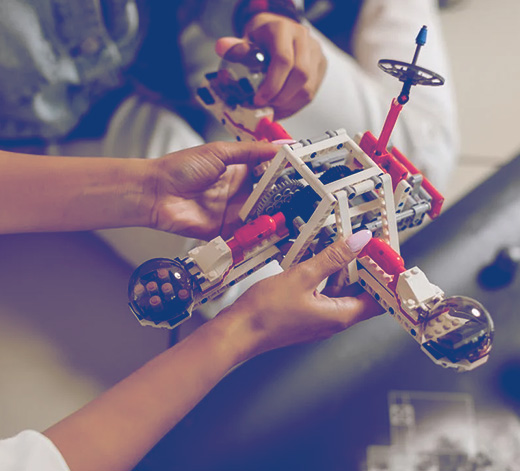
  • Live research on LEGO MINDSTORMS EV3 Kits, NI ELVIS, NI myRIO and Mechatronics Sensor Boards

Department Overview

Key Differentiators
  • Ai-aligned, Futuristic Curriculum: The program covers a futuristic curriculum designed around Industry 4.0/5.0. It is integrated with artificial intelligence, smart manufacturing, cyber-physical systems, automation, IoT, and digital technologies.
  • Industry Certifications: Industrial Certification Program on EVs and Connected Cars with MG Motor India Pvt. Ltd. under MG Nurture Program and certifications from Infosys Springboard, Microsoft, Volvo, MG Motor, Coursera, and Linkedin.
  • Experiential Learning: Hands-on, project-based learning with real hardware, simulations, research projects, capstone projects, and participation in competitions and innovation challenges.
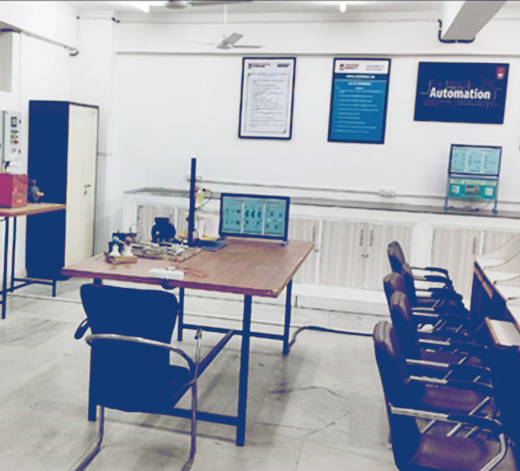
  • Industry Collaborated Labs: State-of-the-Art Industry-Collaborated Laboratories provide hands-on experience. It includes CU Centre of Excellence with Eicher, Flexible Manufacturing Systems Lab, Robotics & Automation Lab, Electrical Drives and PLC Lab, and Project Lab.
  • Advanced Tools & Technologies: The program equips students with advanced computational tools, including MATLAB and Python. They are used to design and analyse AI & ML-enabled mechatronic and robotic systems.
  • 100% Financial Assistance For Research Publications & IPR: The department fosters a robust research and innovation culture. It is evident by over 125 journal publications, 100 patents, and more than 200 student-led capstone projects. 
  • Global Relevance & Long-term Employability: Students gain industry-ready skills aligned with global trends such as autonomous vehicles, drones, service robots, ethical AI, and sustainable engineering. 
  • Mentorhip From Industry Experts: Curriculum co-delivery by experts from Texas Instrumentation Lab, Wonder Automation, Volvo Eicher & MG Motor. 
  • Assured Internship And Placement Opportunities: Students are prepared for diverse careers (Robotics, AI, Automation, Embedded Systems), higher studies (MS/PhD), research, startups, and entrepreneurship.

Internships Companies for
Mechatronics Engineering Students

placement-companies
placement-companies
placement-companies
placement-companies
placement-companies

Scope

A Globally Reputed Program in Master of Engineering with specialization in Robotics & AI

Market Trends of Robotics & AI
  • The Artificial Intelligence in Robotics market is projected to grow from around USD 25 billion in 2025 to approximately USD 126 billion by 2030, at a CAGR of 13.1 % during 2025–2030. Another forecast estimates the AI robots market expanding from about USD 6.11 billion in 2025 to USD 33.39 billion by 2030, at a higher CAGR 40.4 %. 
  • By 2035, some long-term projections suggest the robotics market overall (including AI-driven robots) could grow to over USD 258 billion, driven by automation trends across industries.

Learning Outcomes

  • Gain a strong interdisciplinary foundation in mechanical engineering, electronics, control systems, and artificial intelligence.
  • Develop the ability to model, analyze, and design robotic systems using kinematics, dynamics, and control principles.
  • Enable students to apply AI and machine learning techniques for perception, decision-making, and automation in engineering systems.
  • Enhance proficiency in modern engineering tools and simulation software such as MATLAB, ANSYS, ROS, and AI platforms.
  • Expose students to real-world industrial applications through projects, internships, and industry-academia interactions.
  • Foster professional skills, ethical awareness, and lifelong learning required for careers in Robotics and AI.

Adjunct / International Experts

Dr. Elena A Muravyova

Professor

Department of Automated Technological and Information systems Sterlitamak, Republic of Bashkortostan, Russian Federation

Dr. Suraj Joshi

Assistant Professor

Department of Mechanical and Industrial Engineering Concordia, University, Montreal, Canada

Dr. George Abdou

Assistant Professor

Mechanical and Industrial Engineering New Jersey Institute of Technology, New Jersey

Dr. Sawat Pararach

Associate Professor

Dept. of Mechanical Engineering Thammasat University, Thailand

Dr. Ashok Kaushal

Professor

Dept. of Mechanical Engineering, Concordia University, Canada

Prof. Dr. Mohd. Khair Hassan

Hod and Professor

Department of Electrical and Electronic Engineering, University Putra Malaysia

Dr. Min Chun PAN

Professor

National Central University, Taiwan

Message from the Executive Director

Welcome to the University Institute of Engineering at Chandigarh University. Engineering has always been about more than equations and experiments. It is about the courage to ask difficult questions, the discipline to find rigorous answers, and the vision to turn those answers into things that matter — infrastructure that connects communities, systems that power economies, technologies that improve lives. This Institute was built around that belief. Whether you are stepping in as a first-year student finding your footing, a researcher pursuing a question that keeps you up at night, or a professional looking to deepen your expertise, you will find here an environment designed to meet you where you are and take you further than you expected. Our faculty bring not just academic depth but real-world perspective. Our laboratories and facilities are built to the demands of modern engineering practice. Our curriculum evolves continuously — not because change is fashionable, but because the problems engineers are being asked to solve are genuinely changing, and we take that responsibility seriously. What I hope you will discover, beyond the programmes and the infrastructure, is a culture. A culture where curiosity is encouraged, where collaboration is instinctive, and where the standard we hold ourselves to is set not by what is comfortable but by what is possible. I look forward to being part of your journey here.

Faculty Members

Dr. Gurmeet Singh

Professor

Specialization : Coatings & Tribology

Dr. Pulkit Jain

Assistant Professor

Specialization : Image Processing and Computer Vision

Dr. Balaka Biswas

Associate Professor

Specialization : RF Microwave

Dr. Anuj Gupta

Associate Professor

Specialization : Neuro Fuzzy Logic

Research LABS

CNC Milling in FMS Lab

CNC Milling in FMS Lab

Real Time Practical based learning

Real Time Practical based learning

Strengths of Materials testing Lab

Strengths of Materials testing Lab

Technology Equipments

Labs with latest Technology Equipments

Manufacturing Lab

Advanced Manufacturing Lab

XRD Lab

XRD Lab

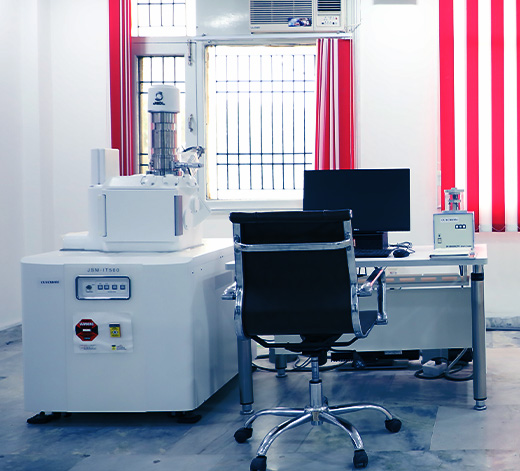
SEM Lab

SEM Lab

3D Printing Lab

3D Printing Lab

Innovation Lab

Texas Instruments & Innovation Lab

Robotics Lab

Robotics Lab Powered by Lego Mindstorms & Ni

Course Roadmap

The course roadmap below will help you in planning your academics and
give you an overview of each upcoming semester.

Make an Enquiry

Students can take up courses from 1000+ options like :

AI for everyone, AI foundations for everyone specialization, machine learning: theory and hands-on practice with python specialization ETC

Student can take up courses from 50+ options like :

Artificial Intelligence Foundations: Machine Learning, Artificial Intelligence for Business Leaders, Artificial Intelligence Foundations: Thinking Machines

Future Promise

  • Ph.D.
  • Teaching and Guiding the future
  • Junior Research Fellowship (JRF)
  • Good MNC Placement

Learning Modules

Some of the many career options for you to choose from.

Semester

Mandatory Certification

Subject Taught

Job opportunity

Sem 1

Matlab

Advanced Engineering Mathematics

Modelling and Simulations

Image Processing and Computer Vision

Manufacturing Systems Automation

Advanced Robotics and Automation Lab

Project Part-I

Robotics Engineer, Design and testing Engineer, Manufacturing Industry, Research and Development, Quality Engineer, Insurance Surveyor, Assistant Professor, Product Design and Costing.

Sem 2

Ansys

Finite Element Methods

Quality Assurance

Design of Experiments

Advanced Manufacturing Lab

Modern Material Handling Systems

Robot Kinematics and Dynamics

Project Part-II

Design Testing and Manufacturing Engineer, Research and Development, Quality Engineer, Insurance Surveyor, Assistant Professor, Design and testing Engineer, Product Design and Costing.

Semester 3 & 4: Project/Paid Internship opportunity with Industry
* 20% Certification course by Industry Experts

Dissertation Domains

Robotics
Additive Manufacturing
IoT and Embedded Systems

Career Prospects (not limited to)

  • Mechatronics Engineer
    • Uses mechanical, computer and controls knowledge to design and create products
    • Researches components of design
    • Tests products for efficiency and adaptability
  • Robitics Engineer
    • Works in team to design and produce robots
    • Tests robotic operations and processes
    • Services and maintains robotics functioning
  • Software Engineer
    • Develops and evaluates computer software/programs
    • Develops new programs for products that are yet to be released
    • Organises software development projects

  • Industrial Designer
    • Develops products for use in homes and business
    • Advises clients on project budgets
    • Tests the ergonomics of products
  • System Engineer
    • Assists in the development of products using drafting

    • Design testing control equipment
    • Researches and advices on design modification to resolve problems
  • Programmer
    • Design the specifications for programs
    • Runs Computer Programs and system in order to test and identify

Pathway After Robotics & AI

Objectives

  • To develop a global understanding of education, research, training, entrepreneurship to promote innovation for technological solutions.
  • To provide the product/ design development skills for technology transfer to industries.
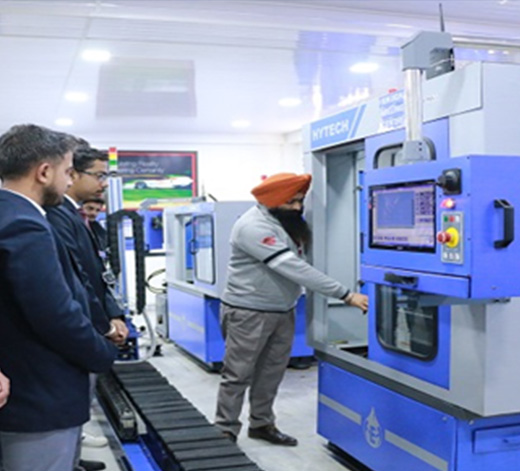
  • To provide state-of-the-art research facilities to create, interpret, apply and disseminate knowledge.

Record Breaking
Placement Numbers

54.75 LPA

54.75 LPA

52.11 LPA

52.11 LPA

36 LPA

36 LPA

30.25 LPA

30.25 LPA

29.16 LPA

29.16 LPA

25.33 LPA

25.33 LPA

22 LPA

22 LPA

Placement Highlights

Why Join Department of Robotics & AI?

The Department of Robotics & AI is a one-of-its-kind department that inculcates the broader spectrum of engineering knowledge to meet the demands of future industry. The department presents a perfect blend of theory and practical learning and bridges the gap between industry and academia.

  • Industry-led & Practice Based Curriculum
  • Content Delivery & Mentoring by Professionally Trained Faculty & Industry Experts
  • Value Added Courses for Placement Training & All Round Personality Development
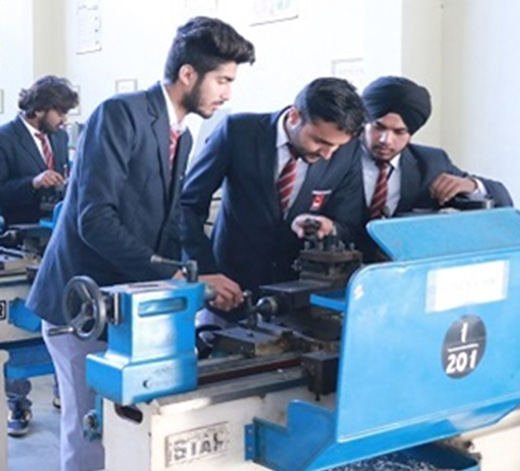
  • Flexible Choice Based Credit System (FCBCS) to choose specialization in areas like Control & Industrial Automation, Biomechatronics, and Robotics

Early Bird Scholarship

Early bird scholarship to the Master of Engineering Programs as per following conditions:

  • 15 (Fifteen) percent scholarship to be given to the students who have completed Bachelor of Engineering from Chandigarh University, provided they pay full semester fee at the time of admission.
  • 10 (Ten) percent scholarship to be given to the students who have completed Bachelor of Engineering/Technology from other recognized Universities/Institutes.

What makes Department of Mechatronics Engineering unique?

The Department of Robotics & AI at Chandigarh University is fully committed to set notch higher standards by facilitating the students with the knowledge of putting the learned concepts into real-life situations. Our academic program relies on upholding professional ethics and is designed keeping in mind the changing global market.

Unique icon

Industry-led Course Curriculum designed after contemplating real-time inputs from industry experts

Unique icon

Experiential Learning through Research & Innovative Projects

Unique icon

Regular Workshops & Seminars by the experts from the industry

Unique icon

State-of-the-Art Lab Facilities and Dedicated Technical Clubs to enhance practical know-how of the students

Unique icon

New Age course contents like Biomedical Systems, Robotics & AI,Electrical Drives and PLC, IoT.

Vision

To be recognized as a Center of Excellence for Research and Innovation in Mechatronics Engineering through modern as well as cutting-edge tools and technologies for serving the society at regional, national and global level.

Mission

The Mission of the Department of Mechatronics Engineering is to:

  • M1: Providing quality education to the students in core and allied fields through state of art infrastructure for meeting the international standards.
  • M2: Enriching research and development culture among students through futuristic tools and technologies for providing solution to industrial as well as societal problems.
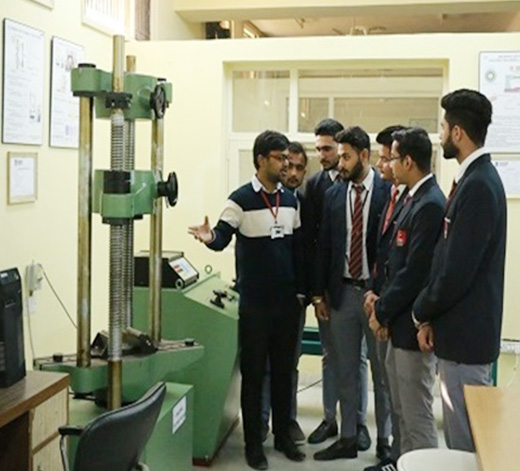
  • M3: Transforming the student's perspective towards innovation and entrepreneurship through core and interdisciplinary technical skills.
  • M4: Developing employability and leadership skills in students through hands on experiential learning and industrial collaboration for preparing industry ready professionals.
  • M5: Inculcating professional and ethical values in young engineers by continuous learning and professional activities.
Vision and Mission of Computer Science and Engineering