
International Journals
Mentoring System
See how our mentoring system helps students thrive academically
International Journals
by Chandigarh University
Research Labs
Groups
Mentoring System
See how our mentoring system helps students thrive academically
Expert talk on “Artificial Intelligence and Machine Learning
The Department of Computer Science and Engineering at Chandigarh University hosted an expert talk...
Read Full Story →SmartTech Ideathon
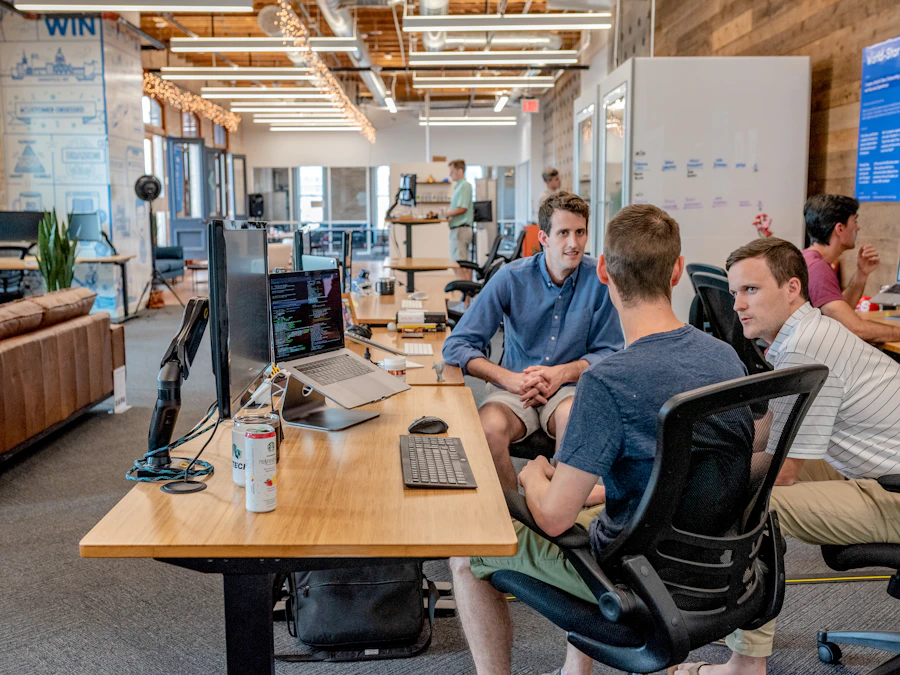
A student innovation platform focused on artificial intelligence, Internet of Things and technology-driven solutions.
Read Full Story →Technology Expert Sessions
Interactive talks help students understand emerging technologies, career opportunities and current industry expectations.
Read Full Story →Mentoring System
See how our mentoring system helps students thrive academically
- To help the students understand the challenges and opportunities present in the university and develop a smooth transition to campus life.
- To counsel academically weak students and to play an important role in motivating students to participate in extra and co-curricular activities.
- To monitor the regularity and disciple of the students.
- To develop life skills that helps students to enhance thinking skills, emotional skills, social skills and value inculcation.
Assigning Mentors to students
- Every teacher is a mentor and is allotted with predefined no. of mentees (a batch of Students).
- The assigned DMC’s will allocate Mentors to all the mentees in their respective departments.
- Mentees are thereby assigned to mentor with Mentor Mentee ratio of 1:36
Meeting with mentees
- All mentors are required to conduct an interactive session with assigned mentees once a week.
- Life skill training and mentoring is provided for 1-4 semester and 5th semester onwards only mentoring is provided for academic performance and career guidance.
- The concerns raised by the mentees (academic, day to day problems related to academics, administration work, hostel etc.) are addressed in the sessions.
- Mentors shall identify mentees whose performance/attendance is below par. Mentors also interact with such mentees and try to find out the cause of these issues and help as much as possible. Mentors will coordinate with parents/ guardians and exchange personal details of students, behavior patterns for prompt pre-emptive or corrective action, through mentor calling process.
- Mentor to inform and encourage students to join competitions, extracurricular co curriculum.
- Mentors are required to note down all the concerns raised by students.
- Mentors take appropriate actions to address those concerns and maintain a record for the same.
- Identify distress students and referral to the chief counsellor.
Key Responsibility Areas of Mentors
- Help the mentee build their profile leading to the creation of E-Portfolio.
- Advise the mentees on how to accomplish their goals.
- Provide career and personal guidance to help increase the mentee's exposure to new experiences.
- Motivate the students to participate in extra and co-curricular activities.
- Analysis of student performance in their group.
- Mentors will coordinate with parents/ guardians and exchange personal details of students, behavior patterns for prompt pre-emptive or corrective action, through mentor calling process.
- Counselling student on personal issues and forwarding the case to chief counsellor with need intervention .
Key Responsibility Areas of Department Mentoring Coordinators
- Overall in charge of mentoring program in their respective departments
- Assistance and guidance to mentor for smooth running of the program
- Analysis of student performance at department level
- Coordinate and Liaison with life skill and mentoring department
- Planning and Organizing life skill activities in their departments
- Maintaining of life skills and mentoring record
- Monitoring the Mentor calling process
University Mentoring Coordinator:
Ms. Ritu Sharma
(Assistant Director, Life Skills and Mentoring)
Email: ad.lsm@cumail.in
Find Your Community
Join a student community to build technical, leadership and communication skills beyond the classroom.
IEEE Student Branch
Technical events, workshops and professional development.
Innovator's Hub
Build ideas, prototypes and solutions for real-world problems.
CyberSec Club
Explore cybersecurity, ethical hacking and digital safety.
WebSparks
Learn web development, UI design and modern technologies.